Handling Duplicate Data and Change Detection in Databricks Using Hash Keys (MD5 vs SHA-256)

Handling Duplicate Data and Change Detection in Databricks Using Hash Keys (MD5 vs SHA-256)

Let’s Talk About the Problem Nobody Wants to Debug

If you’ve spent any real time building data pipelines on Databricks, you’ve probably seen this at some point:

It’s late. A dashboard is showing incorrect numbers.

After digging for hours, you trace the issue back to…

  • Duplicate records
  • CDC jobs are silently missing updates
  • Or, in the worst cases, both

It’s not a glamorous problem – but it’s one of the most common causes of data quality issues in production pipelines.

In a medallion architecture (bronze → silver → gold), problems in bronze don’t stay there. They ripple downstream:

  • Metrics get inflated because the same record is counted multiple times.
  • Updates in source systems don’t reflect in analytics.
  • Debugging becomes difficult because the issue originated upstream.
 

Why Is This Problem So Hard?

At first glance, it seems simple:
“Why not just drop duplicates?”
In reality, pipelines are messier:

  • Source systems retry → duplicate records arrive
  • Data arrives out of order → timestamps can’t be trusted
  • No reliable “change flag” → full records arrive every time
  • Comparing many columns → expensive and hard to maintain


Example:

customer_id

customer_name

amount

C001

Alice

100

C001

Alice

100

These rows are clearly duplicates – but how do you efficiently detect this at scale across millions of records?

The Core Idea: One Hash to Rule Them All

Instead of comparing column by column:

Combine relevant columns → generate a single hash value

  • Same data → same hash
  • Changed data → different hash

    This simplifies everything:

  • Duplicate detection
  • Change detection (CDC)

MD5 vs SHA-256 – Which One Should You Use?

Recommendation:

Feature

MD5

SHA-256

Speed

Fast

Slower

CPU Cost

Low

Higher

Output Size

32-char hex (128-bit)

64-char hex (256-bit)

Collision Resistance

Moderate

Very High

Best For

CDC & Deduplication

Sensitive data

Recommendation:

  • Use MD5 for most pipelines (fast and sufficient)
  • Use SHA-256 for sensitive or regulated data

Implementation in Databricks (Bronze → Silver)

Data Setup    

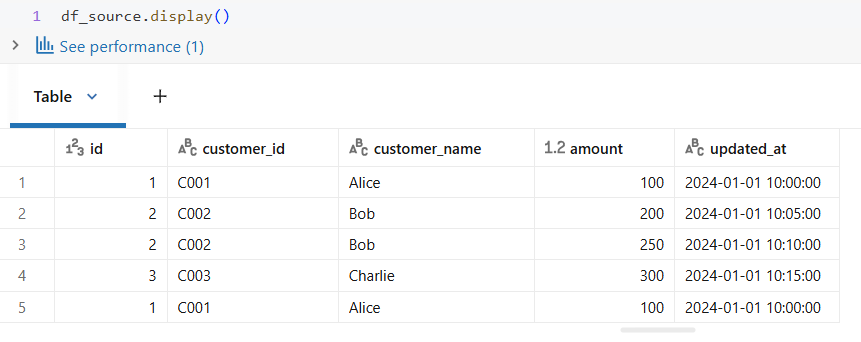
Screenshot 1 - Databricks

Initial Data (Bronze vs Silver)

Bronze Table (Raw Data)

Handling Duplicate Data and Change Detection in Databricks Using Hash Keys (MD5 vs SHA-256)

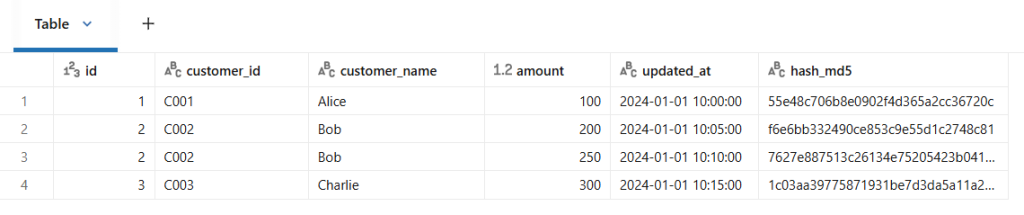
The Bronze table contains:

  • Duplicate records
  • Updated records


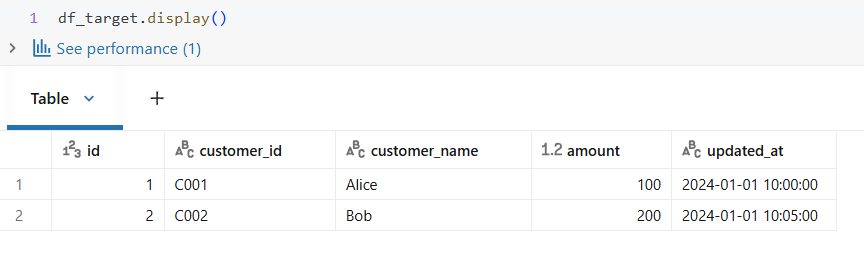
Silver Table (Existing Data)

Screenshot 3 - Databricks

The Silver table represents:

  • Previously processed data
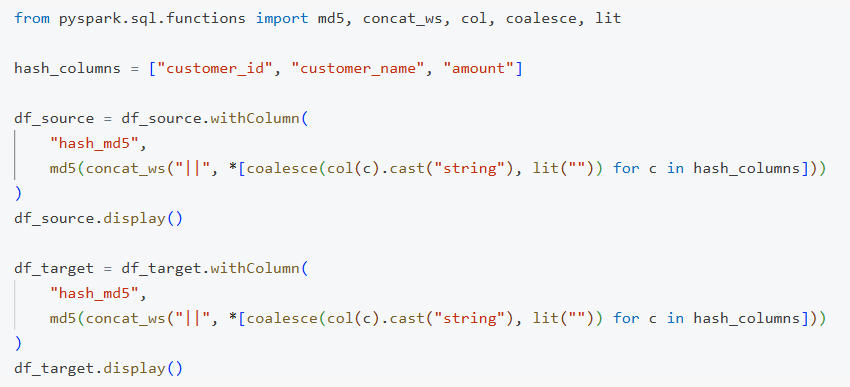
Step 1: Generate Hash Columns
Screenshot 4 - Databricks

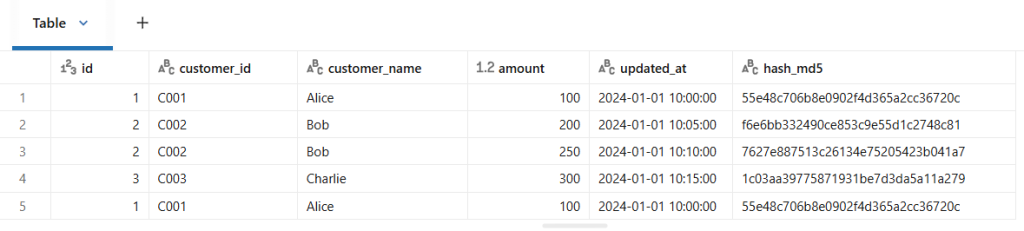
Output: Hash Generation (MD5)

Source Data with Hash

Screenshot 5 - Databricks

Notice:

  • Duplicate records have identical hash values
  • Updated records generate different hashes

Target Data with Hash

Screenshot 6 - Databricks

Optional: Using SHA-256

For scenarios requiring stronger guarantees:

Screenshot 7 - Databricks
  • SHA-256 produces longer and more collision-resistant hashes
  • Comes with a slightly higher computational cost
Step 2: Remove Duplicates
Screenshot 8 - Databricks

Output: Deduplication

Screenshot 9 - Databricks
  • Duplicate records are removed using hash comparison.
  • This ensures clean input before CDC processing.
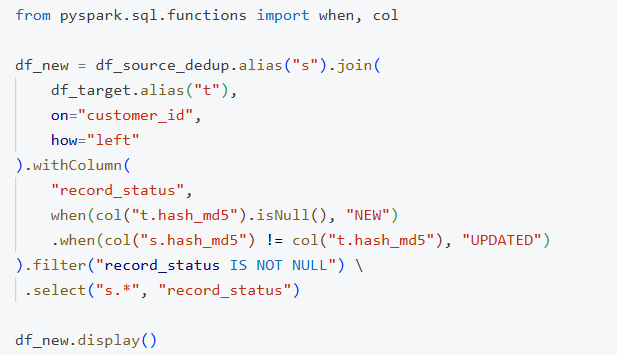
Step 3: CDC Logic (New + Updated Records)
Screenshot 10 - Databricks

Output: CDC Result

Screenshot 11 - Databricks

Interpretation:

  • Records not found in target → NEW
  • Records with changed hash → UPDATED
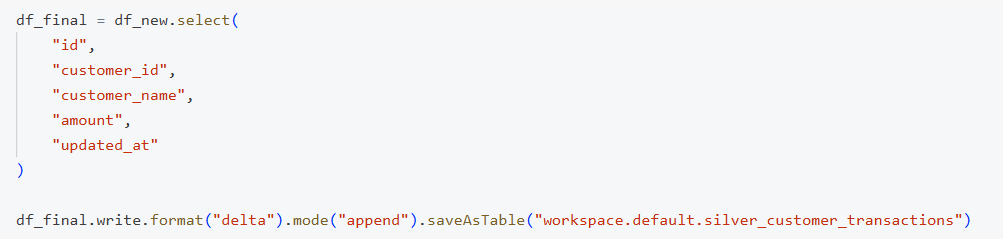
Step 4: Write to Silver Layer
Screenshot 12 - Databricks

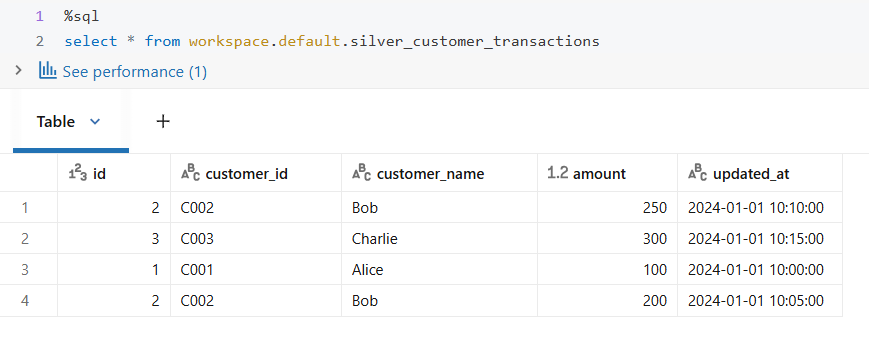
Output: Silver Table

Screenshot 13 - Databricks
  • Only business columns are written
  • Helper columns are excluded

Things to Watch Out For

  • Hash only relevant business columns
  • Maintain consistent column order
  • Handle null values properly
  • Exclude helper columns before writing
  • Do not use hash as a business key

Best Practices

  • Deduplicate before CDC
  • Use MD5 for performance-heavy workloads
  • Use SHA-256 when needed
  • Align schema before writing
  • Optionally stores hash for future incremental loads

Final Thoughts

Handling CDC and duplicate data at scale can be complex – but hash-based techniques make it significantly simpler.

They provide:

  • Simplicity
  • Performance
  • Scalability

Instead of comparing multiple columns, you only need to compare a single hash value.

Key Takeaway

“In large-scale data pipelines, efficiency comes from simplifying comparisons – and hash keys make that possible.”

Hash-based techniques provide a scalable and efficient approach to handling CDC and duplicate data in modern Databricks pipelines.

-Kesavan K
Data Engineer

Facebook
WhatsApp
Twitter
LinkedIn
Pinterest